
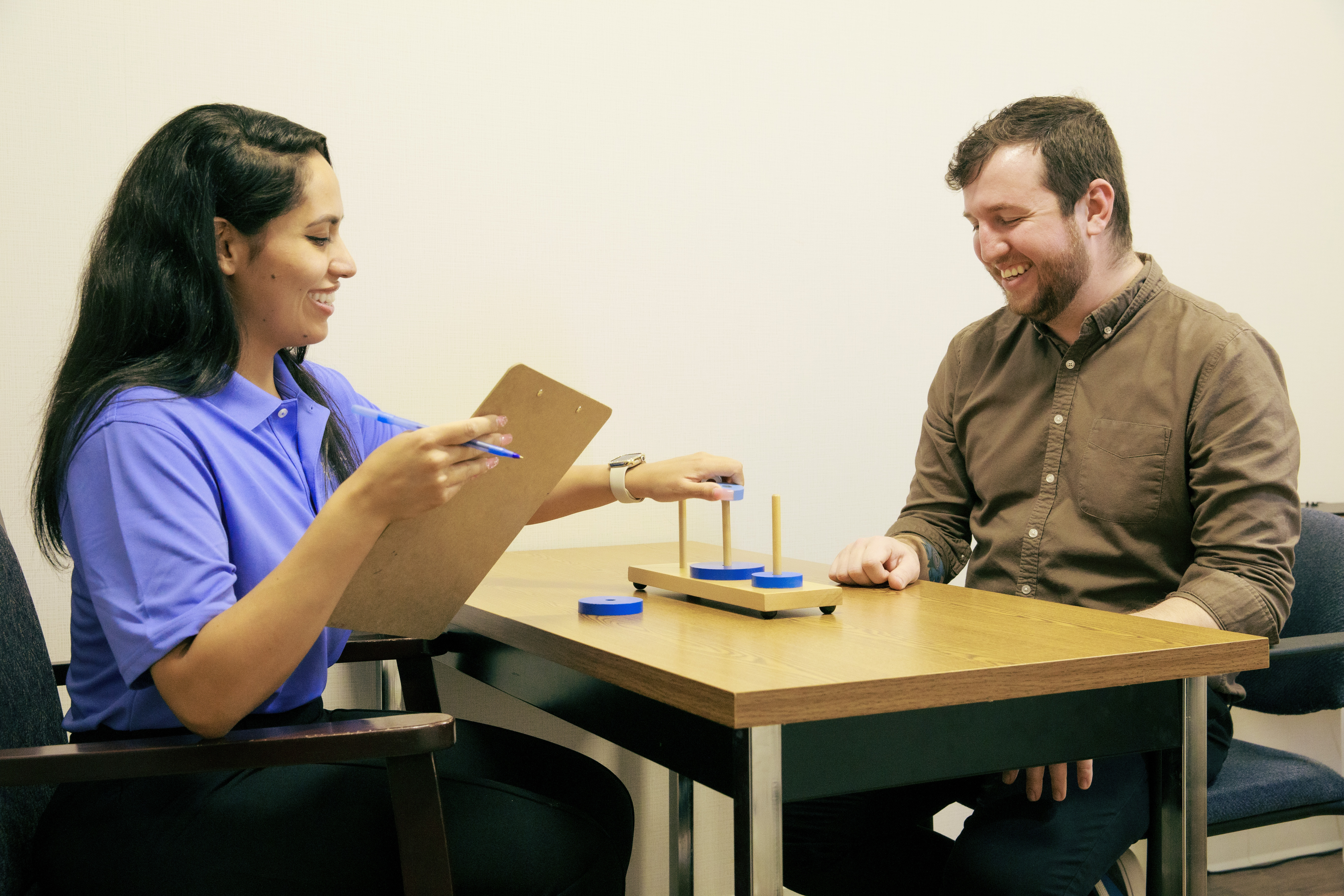
For healthcare professionals
Kessler Foundation conducts rehabilitation research for individuals living with stroke, traumatic brain injury, spinal cord injury, multiple sclerosis, cerebral palsy, and other neurological conditions. If you have patients who may be interested in learning about research opportunities, please share this resource with them.
Filter and search for open study opportunities below.
The purpose of this research is to examine the effectiveness of back or spine stimulation while walking on a treadmill or walking over ground using an exoskeleton or on muscle activation while sitting on a chair
The purpose of this study is to investigate whether combining training of the affected upper limbs in patients with SCI with a noninvasive technique of brain stimulation called transcranial direct current stimulation (tDCS) can improve training outcomes. tDCS is a painless and noninvasive method (does not involves surgery) of activating the brain with the use of low-level direct electrical current.
In this pilot study, we want to study the neural mechanism of walking in able-bodied subjects and iSCI subjects who have some control of muscles below the level of injury (American Spinal Injury Association Impairment Scale (AIS) D).
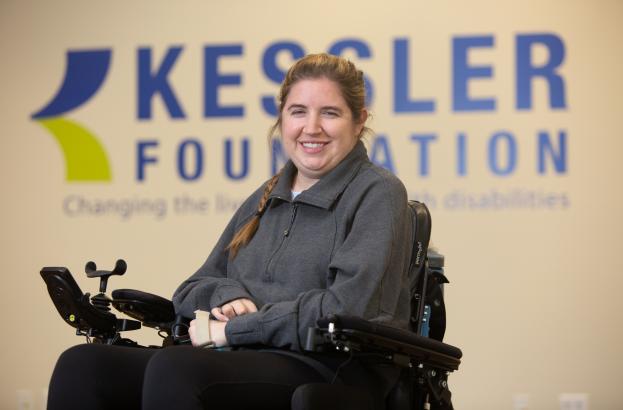
Every discovery begins with people. It’s accelerated by those who choose to take part, and donors who choose to act.
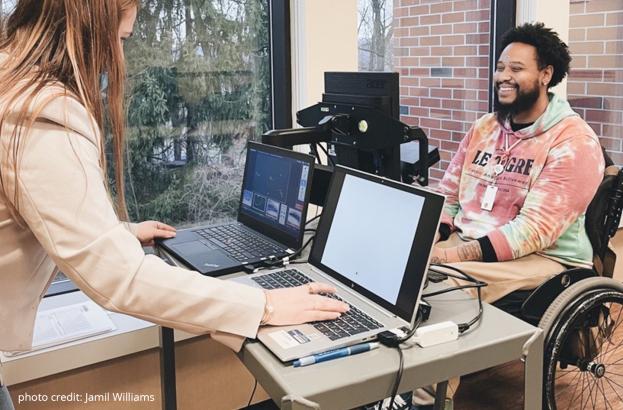
Using the Eyes to Study the Brain
This study explores a new set of hands-free tests that will assess ability to learn new information and how quickly participants process information. These new tests use a system that measures the movement of your eye (an "eye tracking system") to record responses to various thinking tasks.
FAQs About Joining a Research Study
Rehabilitation research studies are designed to help people with neurological and physical conditions become as independent as possible in everyday activities, restore function and mobility, enhance memory and learning, and improve quality of life.
First, check out our list of research studies that are now enrolling participants. Once you find a study that interests you, complete the “Join a Study” form found on each study page. Then a member of our research recruitment team will reach out to discuss the study and determine whether you are eligible to participate.
Our scientists seek to improve memory and learning, mobility, and long-term outcomes, including employment, for people with neurological and physical disabilities including traumatic brain injury, spinal cord injury, stroke, multiple sclerosis, and autism. We also study the role of caregivers who assist individuals with disabilities with daily activities, and we help people return to the workplace after disabling illnesses or injuries.
We offer a number of tele-studies that can be completed from your home, while others may require you to visit one of two Foundation locations in East Hanover, NJ, or West Orange, NJ. In some cases, we may be able to travel to your home or provide reimbursement for travel to our offices.
Some studies are completed in one day, while others may need volunteers to be available for follow up from six weeks to more than a year.
To achieve results that help as many people as possible, participants of all ages and ethnicities are needed in our studies.
Yes, absolutely! People without disabilities can serve as controls in research studies. Comparing the results between people with and without disabilities helps researchers prove the efficacy of their interventions.
Participating in our research studies is completely voluntary, and if at any time anyone is uncomfortable or unable to continue the study, they are able to withdraw.
Most of our studies provide compensation to volunteers for participation. The amount paid varies for every study. Some studies reimburse participants for travel or cover Uber Health or Lyft Concierge rides.
Each individual has their own motive for participating, but volunteers are vital to the ongoing rehabilitation research at Kessler Foundation. Their assistance helps scientists identify new treatments and interventions that can change the lives of loved ones and others with disabilities and debilitating health conditions. These scientific advances are made possible when people like you volunteer for research. To learn more, read our article “3 Reasons to Join a Research Study.”
Tell us a little more about yourself so that our recruitment team can help you enroll in a study that is right for you.
No staff members found matching your criteria.
