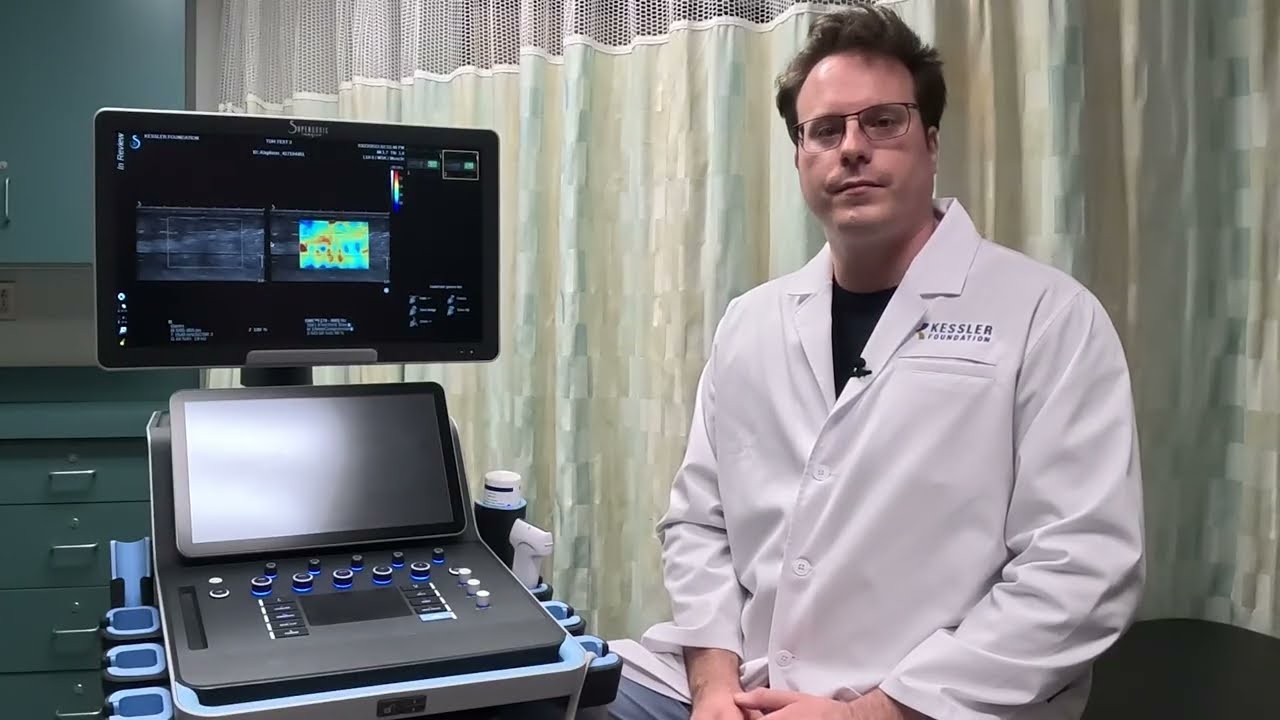
Nathan Hogaboom, PhD, is a research scientist in the Center for Spinal Cord Injury Research at Kessler Foundation and director of the Derfner-Lieberman Laboratory for Regenerative Rehabilitation Research. Dr. Hogaboom joined Kessler Foundation as the inaugural Derfner Foundation Postdoctoral Fellow in Regenerative Rehabilitation Research after earning his Doctorate in Rehabilitation Science and Technology from the University of Pittsburgh. He is a member of the Editorial Board of the Journal of Spinal Cord Medicine, the Research Committe of the Association of Academic Physiatrists, and the AAP Regenerative Rehabilitation Consortium American Congress. He is also the Early Career Officer of the American Congress of Rehabilitative Medicine's Spinal Cord Injury Interdisciplinary Special Interest Group. He is a research assistant professor in the Department of Physical Medicine and Rehabilitation at Rutgers New Jersey Medical School.
In 2020, he was recognized as a ‘rising star’ by the Alliance for Regenerative Rehabilitation Research and Training for his investigation of micro-fragmented adipose tissue for treating shoulder pain caused by rotator cuff pathology in people with spinal cord injury. He has published in peer-reviewed rehabilitation journals and co-authored the chapter on overuse injuries and fractures in Spinal Cord Medicine ed 3 by Kirshblum and Lin. His research focuses on applying the principles of regenerative medicine to the development of new interventions for musculoskeletal pain and spasticity, and using biomarkers to measure responses to treatment.
Background and Expertise
Expertise
Education
Honors
Publications
View comprehensive listings of Dr. Hogaboom’s publications on Research Gate, PubMed and GoogleScholar.
Research Interests
Dr. Hogaboom’s current research focuses on regenerative rehabilitation interventions for degenerative musculoskeletal pathologies in wheelchair users and able-bodied individuals in civilian and military populations. He also studies secondary complications of spinal cord injury with an emphasis on musculoskeletal pain, spasticity, and assistive technology, and the quantitative assessment of soft-tissue pathology using noninvasive imaging and other biomarkers. Funding sources include the Derfner Foundation, Geneva Foundation, National Institutes of Health, Craig H. Neilsen Foundation, and New Jersey Commission on Spinal Cord Research.
Multimedia