
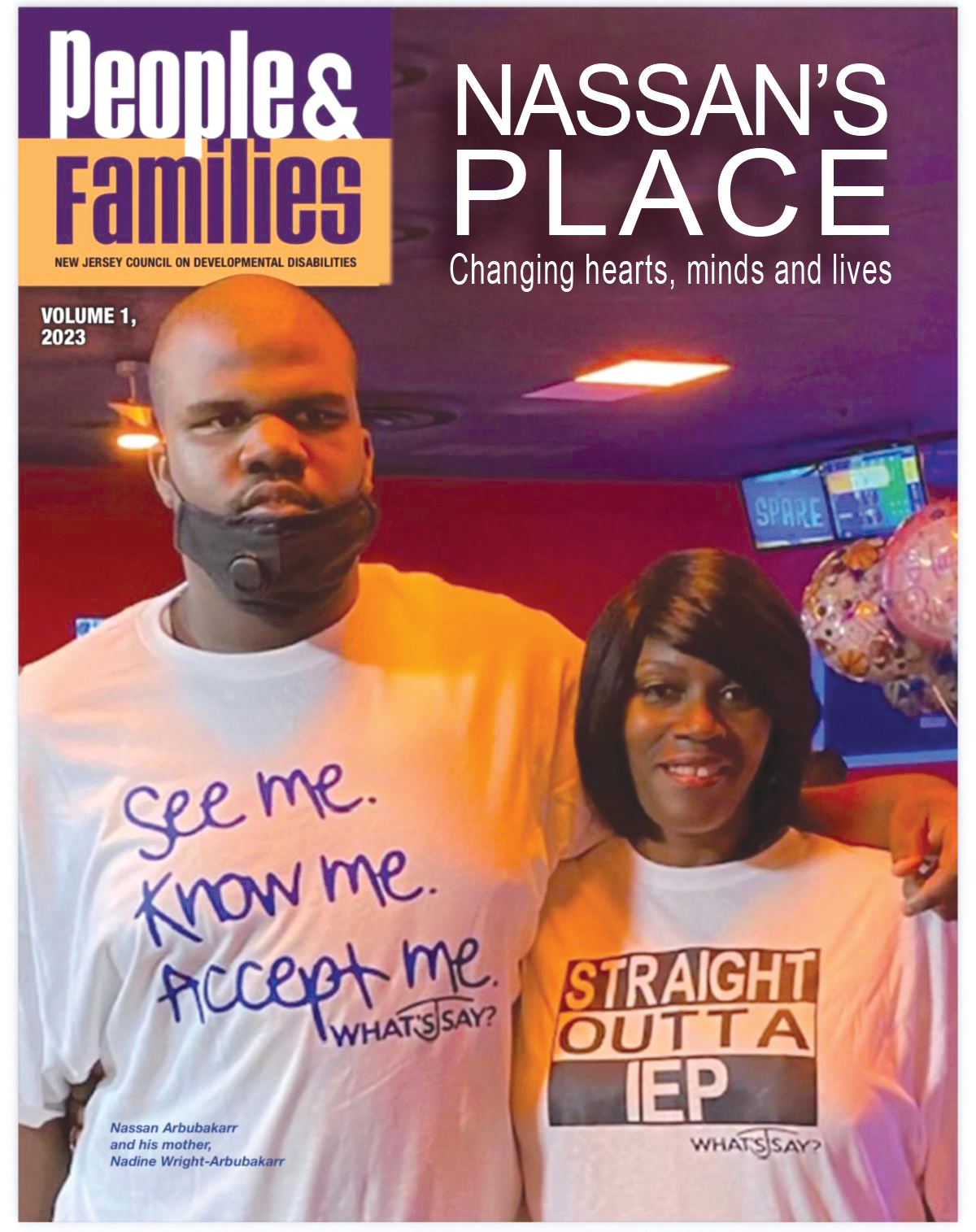
Nadine Wright-Arbubakrr, whose son Nassan is on the autism spectrum, experienced first-hand the lack of accessible, affordable resources in her community. In response, she founded Nassan’s Place, an educational and recreational program based in Newark, NJ, to assist families like hers. More recently, she joined the Consumer Advisory Board at Kessler Foundation’s Center for Autism Research, led by Helen Genova, PhD. Nadine notes, “Through advocacy and research, and with the generous support of Kessler Foundation donors, we’re increasing awareness, and even starting to examine the socioeconomic factors that further impact children with autism in underserved communities. The resulting interventions could be transformative". Below is an excerpt from a conversation between Dr. Genova and Nadine discussing the importance of including underserved communities in autism research.
Why do you think it is important to include underserved communities in autism scientific research?
Helen Genova, PhD. Significant racial, ethnic, and socioeconomic gaps persist in scientific research. Most autism research studies have an overrepresentation of Caucasian families. It’s important to ensure that our results represent diverse communities, and it is up to us as scientists to break through the barriers that continue to create unbalanced study results.
Nadine Wright-Arbubakkr. I agree. Underserved and underrepresented populations must be involved in research. If not, scientists are missing a big piece of the picture. For example, there are differences among races: we are culturally and genetically distinct. If certain populations are not involved in research, then we don’t know how these differences affect the research results.
Which recruitment methods do you recommend to increase diversity in scientific autism research?
Helen Genova, PhD. I have found that the typical methods for recruiting individuals with autism for our research studies (e.g., posting on social media or distributing flyers in schools and physicians' offices) were not effective at reaching diverse communities. I decided to engage experts by creating a community advisory board representing diverse ethnicities and cultures to guide this diversity initiative. I contacted Nadine after hearing about the amazing work she and Nassan’s Place are doing for the community. She had helpful ideas for making our recruitment more accessible to a broader community.
Nadine Wright-Arbubakkr. First things first, we need to educate parents on why they should be involved in research! Members of any research team should attend community support groups or conduct programs that share the work being done directly in the community. Also, scientists need to make research studies easier and more accessible for families to contribute. For example, after-work appointments may be difficult to schedule for single-parent households. Why not provide transportation or additional stipends to cover childcare costs so families can participate more easily? Even better, offer virtual study options so busy families can participate from home.
How will Nassan’s Place and Kessler Foundation work together to improve the lives of underserved communities?
Helen Genova, PhD. I’m honored to be involved with Nassan’s Place and thrilled to have Nadine’s expertise on my community advisory board. I look forward to working closely with Nassan’s Place in the future. My staff and I will attend Nassan’s Place Autism Awareness Day on April 2, 2023, in Newark, NJ, which is scheduled for World Autism Awareness Day. We can’t wait to meet everyone and share our current research studies.
Nadine Wright-Arbubakkr. This is a win-win opportunity! Through our partnership, Kessler Foundation and Nassan’s Place can reach more people in need. The Foundation will expand autism research to underrepresented communities, and families will have access to a new resource to help their children on the spectrum
