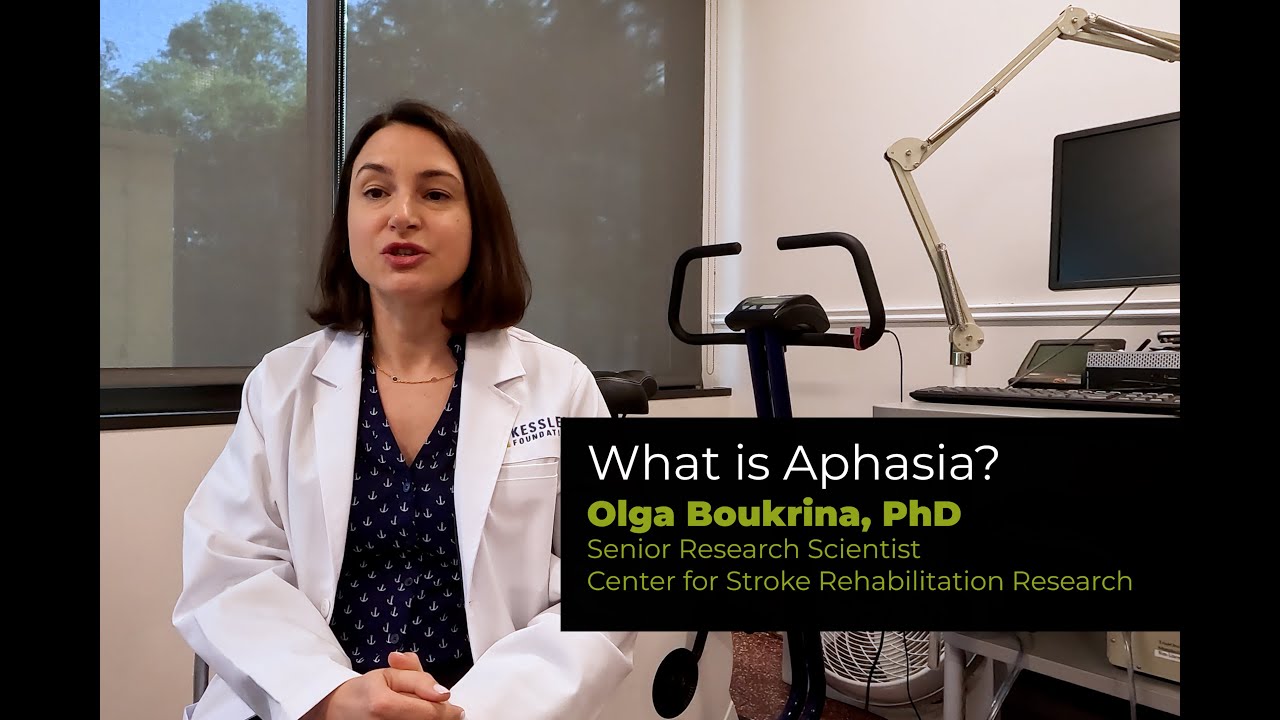
Olga Boukrina, PhD, is an assistant director in the Center for Stroke Rehabilitation Research at Kessler Foundation where she also directs the Neurolinguistics and Brain Connectivity Laboratory. Her research integrates behavioral and neuroimaging data to advance the understanding, diagnosis, and treatment of cognitive deficits following neurological injury. A major focus of her Laboratory is a communication disorder called aphasia, which often results from stroke and affects speaking, understanding, reading, and writing.
Dr. Boukrina leads several ongoing studies on the neural mechanisms of stroke recovery and treatment response, with the goal of developing targeted rehabilitation strategies for people with chronic aphasia and acquired reading impairments.
Dr. Boukrina holds research affiliations with the Department of Physical Medicine and Rehabilitation at Rutgers New Jersey Medical School and with the Department of Cell Biology, Neuroscience and Physiology at Rutgers-Newark School of Graduate Studies.

Background and Expertise
Expertise
Education
Honors
Publications
View a comprehensive listing of publications for Dr. Bourkrina on ResearchGate.
Research Interests
Dr. Boukrina's research focuses on why people with aphasia recover differently after stroke. She uses that knowledge to personalize treatment. Her laboratory uses longitudinal neuroimaging to identify brain biomarkers that predict recovery trajectories in people with aphasia and stroke-induced reading deficits. Building on these findings, her team develops and tests new interventions. One approach uses real-time fMRI neurofeedback to increase neural activity in the left hemisphere as a way to improve reading recovery in aphasia. Her laboratory also uses reading-focused Phonomotor Therapy. PMT is an intensive treatment designed to retrain damaged phonological networks, across multiple studies. These include an ongoing five-year randomized controlled trial that combines PMT with aerobic exercise to improve cerebral circulation and language function in people with aphasia after stroke. Her long-term goal is to develop prognostic and therapeutic tools that improve cognitive outcomes and quality of life for people after stroke.
Multimedia