
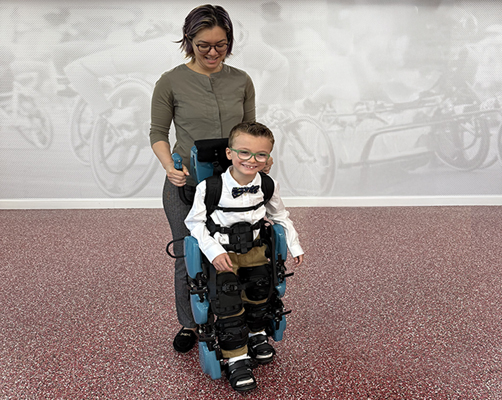
When six-year-old Colin Witte learned he would be among the first children in the country to try a pediatric robotic exoskeleton, he was thrilled. “I named it Iron Man,” he says with a huge smile.
Colin, who has cerebral palsy, participated in a Kessler Foundation pilot study testing the safety and feasibility of robotic gait training for children. “After trying it, I felt like I had strong legs,” Colin says. “It made me feel powerful.” Colin’s growing power exceeds the physical: in the short time since he’s worked with Foundation researchers, his confidence and positive attitude have made a big impression. He even showed the Foundation executive board how to use the robotic exoskeleton. His progress reflected the study’s encouraging findings that gait training with the device led to meaningful improvements in mobility and activity among children with cerebral palsy.
The kids who participated showed an 80 percent increase in step count and 33 percent improvement in functional mobility, balance, and dynamic movement. Colin already has plans to put his new skills to good use at sports camp this summer, and he recently learned to ski. His advice to other kids who might have opportunities to try something new? “You don't have to be scared, just go out there, have fun, and be yourself.”
Colin’s courage and willingness to take chances is a superpower in its own right, reflecting the confidence to embrace new possibilities. Donor generosity fuels that same spirit, driving meaningful advances for people with disabilities of any age.
