
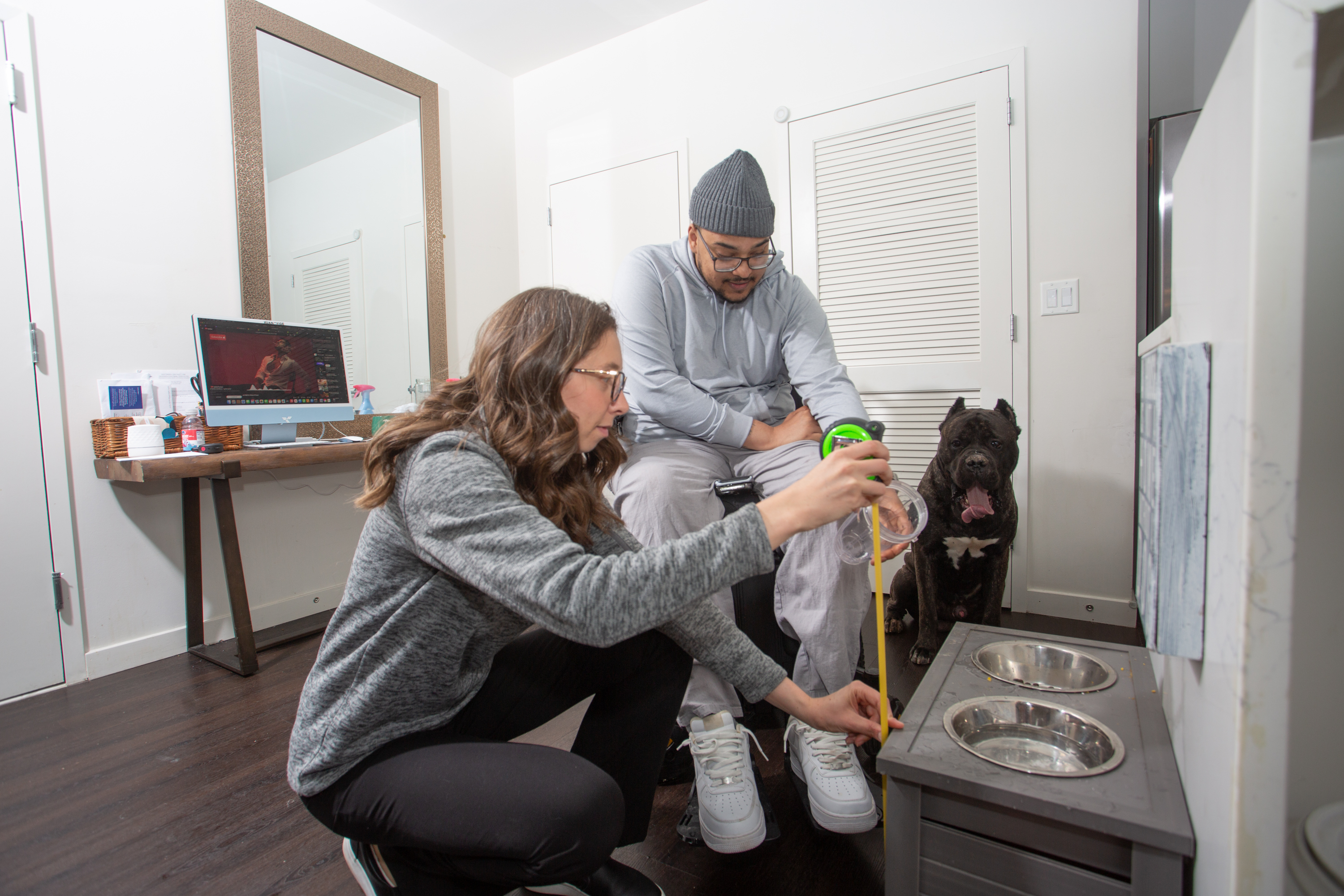
After a 2021 motorcycle crash, Louis Ayala worked hard in rehabilitation, then discovered how difficult it was to coordinate outpatient therapy, wound care supplies, and medical equipment once he got home. Everyday tasks in his apartment required new planning and energy.
“I felt like I just got smacked,” he says. “You leave rehab, and suddenly you’re dealing with everything: appointments, equipment, your home, and it’s not working for you anymore.”
Accessing outpatient therapy, wound care supplies, and medical equipment became an ongoing challenge. His apartment was difficult to manage in a wheelchair, and everyday tasks required far more planning and effort than he anticipated.
“That’s when having another advocate really matters,” Louis says. “It’s always helpful to have someone else in the room with you. I’m just glad she was there.”
Kessler Foundation SCI Navigator Emily DeBel began working with Louis through an in‑depth intake and needs assessment that looked beyond medical care to housing, emotional health, and long‑term goals.
“After spinal cord injury, people are expected to advocate for themselves in a healthcare system that’s extremely complex,” Emily says. “And they’re doing that while adjusting to a major, life‑altering injury.”
Emily conducted a home visit, worked with building managers to explore accessibility improvements such as automatic door access and a safer shower setup, and helped coordinate SCI-specific outpatient therapy. She also supported Louis in resolving delays with wound care supplies and medical equipment.
“When we’re in someone’s home, we can see what’s really impacting their independence,” Emily explains. “Our goal is partnership. We problem-solve with the person, so over time they can navigate these systems more independently.”
Today, Louis is focused on what comes next. An artist at heart, he is channeling his experience into launching Chosen One, a clothing brand designed to reflect resilience and identity, and he credits donors for making this kind of support possible.
