
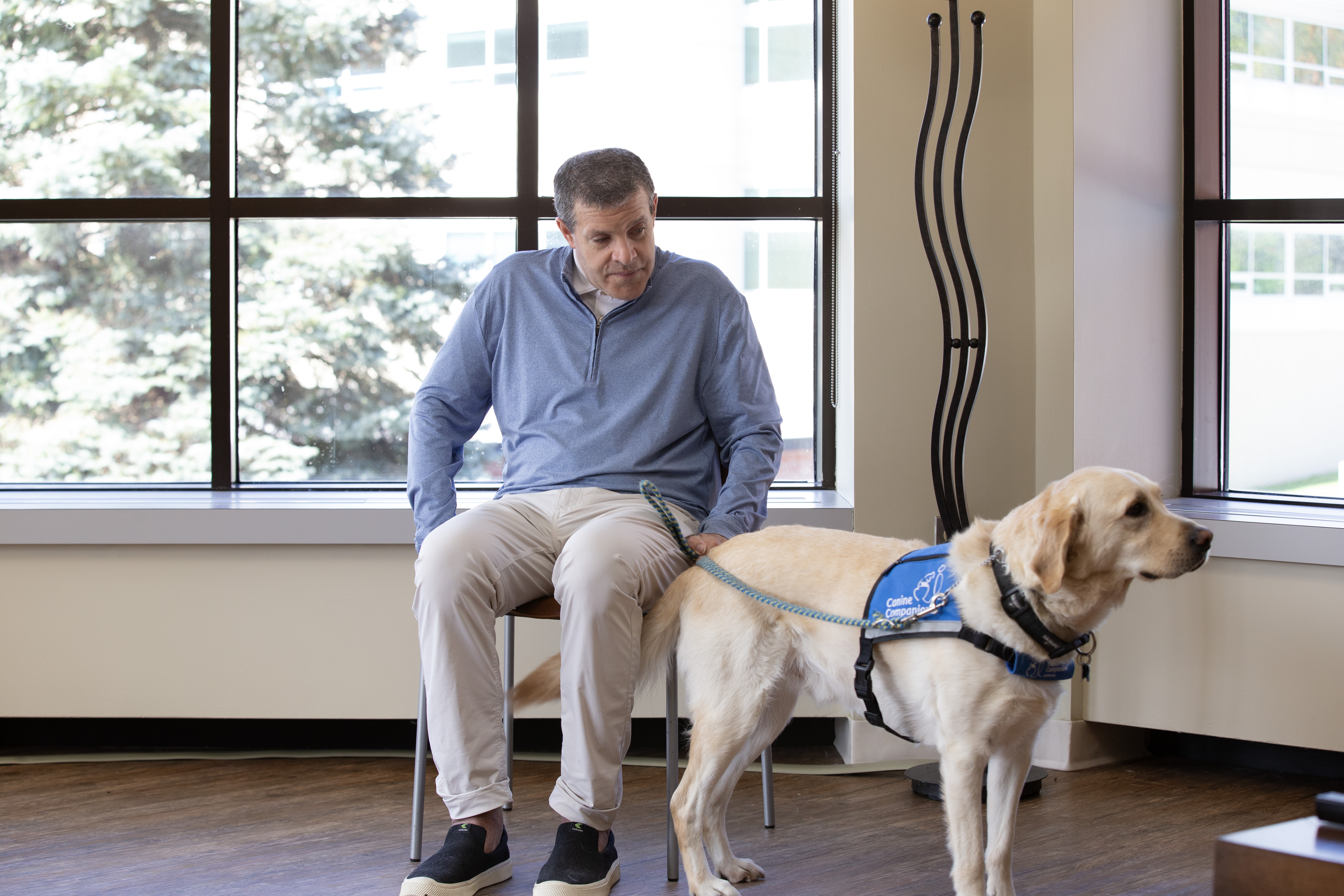
John McAleavey has lived with a spinal cord injury for 32 years. While thriving today, he vividly remembers his early struggles. “The worst day of my life was the day I was injured. But returning home after my hospital and rehabilitation stays was another day I will never forget. It simply opened up a range of issues my family and I were not prepared for.”
These days, in addition to being a podcaster and an SCI peer counselor, John is helping to guide two new innovative programs designed to improve outcomes and quality of life after spinal cord injury. As a member of the steering committee, he shares his insights on the myriad complex challenges that come with SCI.
Navigating life after a spinal cord injury can be daunting. Individuals and their families are overwhelmed with information, difficult decisions, and an uncertain future, all while dealing with the physical and emotional impact of a life-altering injury. Two complementary, multi-faceted new programs from the Center for Spinal Cord Injury Research offer a comprehensive roadmap to overcome these challenges and empower individuals with SCI to rebuild their lives.
From Hospital to Home
Through an integrated outreach and education program, individuals with SCI receive support and guidance to successfully transition from hospital to home and optimize their outcomes. “Providing educational and supportive resources at the onset of injury is key to our SCI Navigator Program,” says Denise Fyffe, PhD. “A team of SCI Navigators will work closely with clinicians to help patients and their families transition from the acute care hospital to a rehabilitation facility and then home.” They will provide resources to facilitate home modifications, access transportation, schedule outpatient rehabilitation, and address health insurance and financial challenges.
Elevating Caregiver Training
Individuals with SCI rely on others for care and assistance; however, most caregivers are ill-prepared for this role. “Our new Community Connect program will provide family members and hired caregivers with hands-on skills training, video resources, and peer support to enhance their well-being and help them meet the needs of those they assist, especially as circumstances change over time,” explains Jeanne Zanca, MPT, PhD. “The program provides support where it is critically needed, in the ‘real world’ of life at home and in the community.”
Thanks to the generosity of our donors, these programs are helping newly injured individuals and their families move from catastrophic injury to thriving at home and in the community, transforming what it means to be an SCI survivor. “Because of donors like you, these programs increase understanding, ease fears, and provide much-needed resources,” adds John.
