
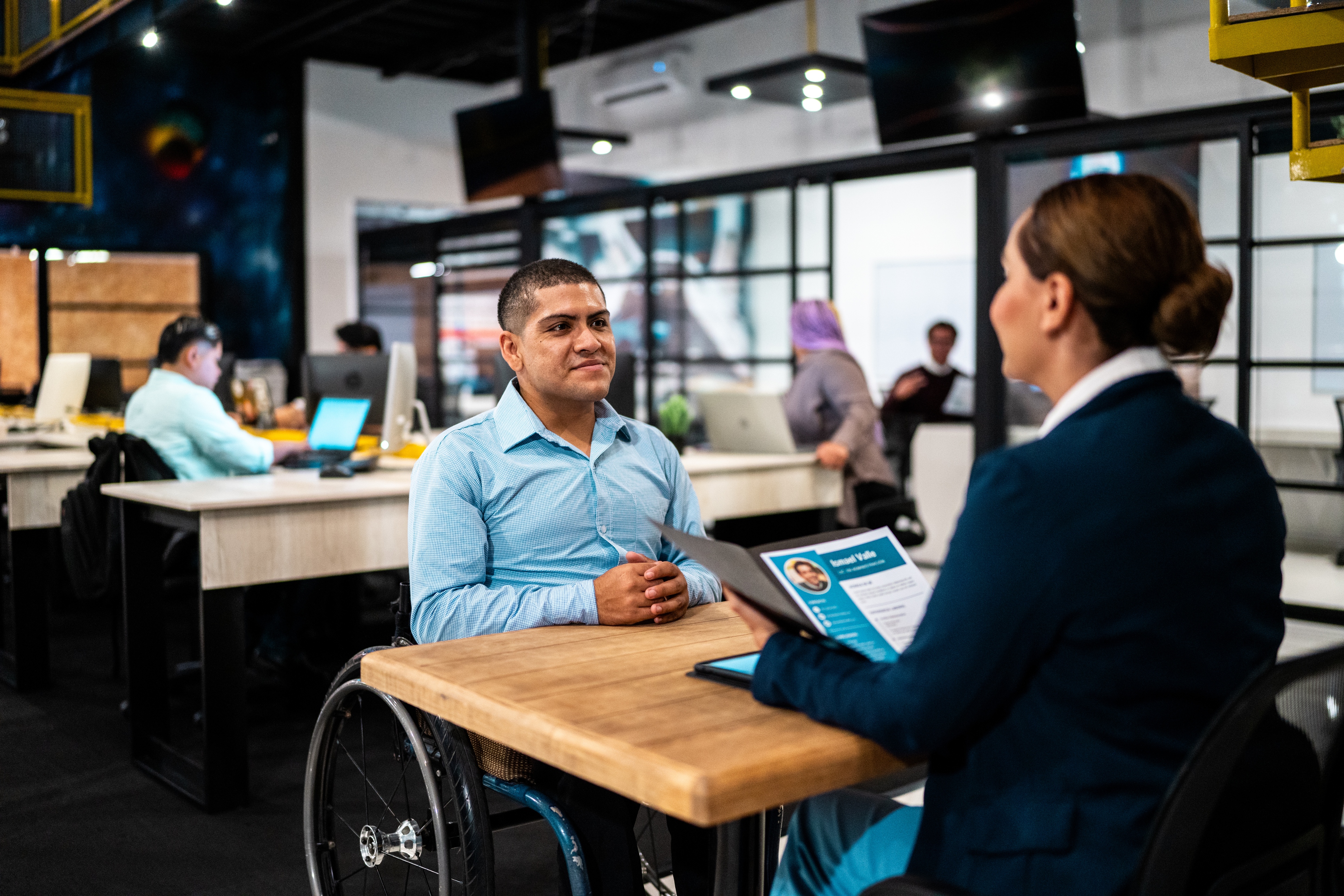
For people living with spinal cord injury, returning to work can be one a meaningful but difficult milestones in recovery. Yet nationally, employment outcomes remain strikingly low. Just 12% to 20% of individuals with SCI are employed one year after injury, underscoring the urgent need for new approaches to vocational support.
Researchers at Kessler Foundation set out to change this trajectory.
A New Model That Starts Early and Stays Connected
Through a collaboration between the Center for Employment and Disability Research and the Center for Spinal Cord Injury Research, and with pilot funding from the Craig H. Neilsen Foundation, Kessler Foundation developed and pilot-tested an innovative Vocational Resource Facilitation model designed specifically for individuals with SCI.
Rather than waiting until rehabilitation ends, the VRF model integrates employment planning early, beginning during inpatient rehabilitation, and continues support for two years after discharge. At the center of this approach is a Vocational Resource Facilitator, embedded within the rehabilitation team, who works closely with individuals, families, clinicians, and community partners to coordinate services and keep employment goals on track.
This coordinated, person-centered approach recognizes that returning to work is not a single event. It is a process that requires continuity, planning, and sustained support.
Measurable Results, Meaningful Impact
The results have been transformative.
Among individuals who received VRF services, 50% were employed one year after discharge, more than doubling typical employment rates after SCI. Across participating centers and study years, this represents a 317% improvement in employment outcomes, with similarly strong gains compared with historical benchmarks both nationally and within the Northern New Jersey SCI System.
These outcomes demonstrate that when vocational support is treated as an essential part of rehabilitation, rather than an afterthought, people with SCI are far more likely to return to meaningful employment.
Advancing Knowledge, Sharing Solutions
The VRF model is detailed in a pilot-tested guide developed by Kessler Foundation researchers and rehabilitation experts. The guide provides a roadmap for implementing early, coordinated vocational services in spinal cord injury rehabilitation settings.
This work also aligns with Kessler Foundation’s Return to Work podcast series, which explores real-world strategies, challenges, and success stories related to employment after disability. The series amplifies the voices of researchers, clinicians, and individuals navigating the return-to-work journey.
Changing What’s Possible
By rethinking when and how vocational support begins, Kessler Foundation is helping to redefine employment outcomes after spinal cord injury. The success of the Vocational Resource Facilitation model shows that with the right support, returning to work after SCI is not the exception. It can become the expectation.
