
“What if…?” It’s a question that researchers always ponder—and your support helps to answer.
Karen Nolan, PhD, associate director of the Center for Mobility and Rehabilitation Engineering Research at Kessler Foundation, recently wondered, “What if spinal stimulation were combined with gait training to help people walk again after traumatic brain injury?”
In a new study, Dr. Nolan aims to find out and it could be a game-changer. “Spinal stimulation has been successful in improving motor function in individuals with spinal cord injury and stroke.
We now have the opportunity to understand if and how combining this technology with gait training, which isphysical therapy designed to improve the ability to stand and walk, can help restore neural pathways, mobility, and independence for people with TBI,” Dr. Nolan explains.
Did you know?
Traumatic brain injury is a significant cause of disability. Despite the many advances in TBI gait research in the last decade, over two-thirds of the 2.8 million individuals diagnosed with TBI each year struggle with community walking, which is the ability to navigate safely when away from home, such as at work, school, restaurants, or stores. “Kessler Foundation seeks to change that,” says Dr. Nolan. “We expect that the combination of spinal cord stimulation and gait training will facilitate adaptive brain plasticity, the brain’s ability to rewire itself, more than gait training alone, making it a powerful intervention for people with TBI.”
Breaking down the science
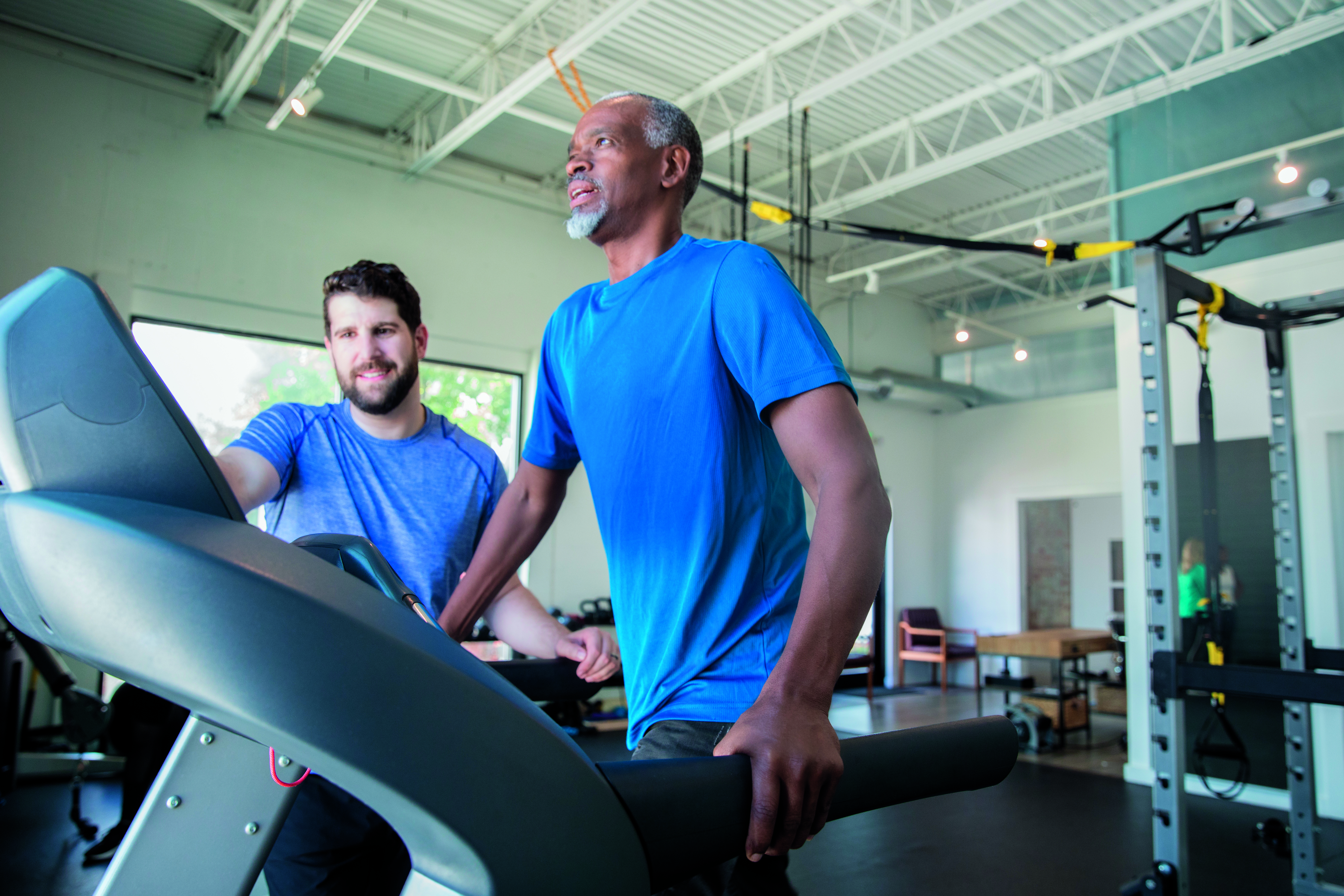
During each session, researchers will place electrodes on the participant that will deliver electrical impulses along the spinal cord (called transcutaneous spinal cord stimulation) and spark neural activity in the brain. Participants will then engage in a series of gait and walking exercises, three sessions per week for six weeks. Several standard metrics will measure motor and neural function and efficiency.
Dr. Nolan anticipates that this two-prong approach will strengthen neural pathways, enhance communication from the brain to the muscles, nerves, and bones that control movement, and support motor recovery.
“Our goal is to learn what works. We want to understand which interventions, individually or in combination, drive the best recovery and quality of life for people with TBI,” says Dr. Nolan. “We can then leverage this knowledge and determine how to apply it to other populations. I’m already thinking about the next ‘What if…’ and how we might build on this trial and amplify outcomes.”
Dr. Nolan credits your generosity for providing the platform upon which research is built. “Our donors are catalysts for change, allowing Kessler Foundation scientists to conduct pilot studies and pursue pioneering clinical trials that have the potential to transform medical rehabilitation.”
